




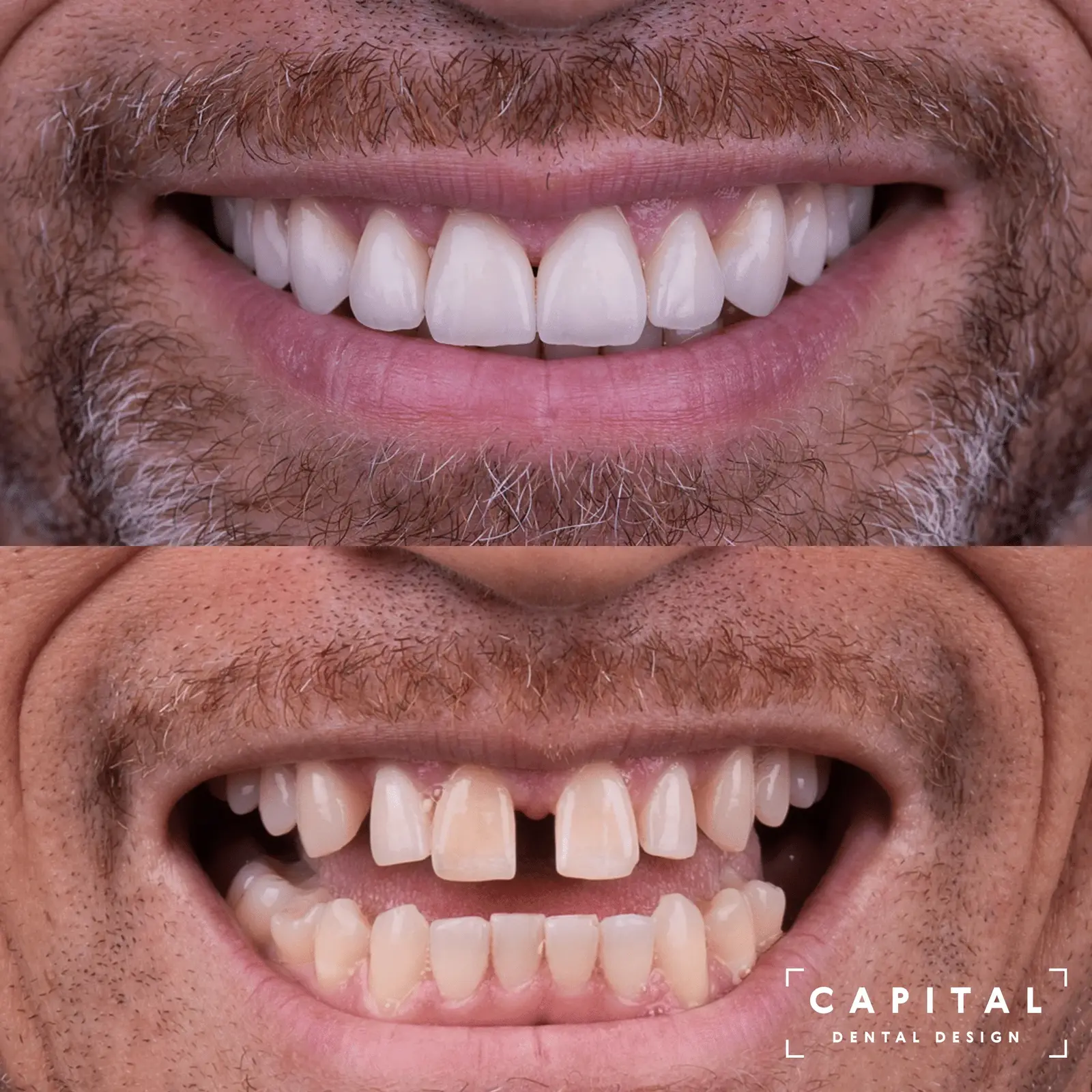
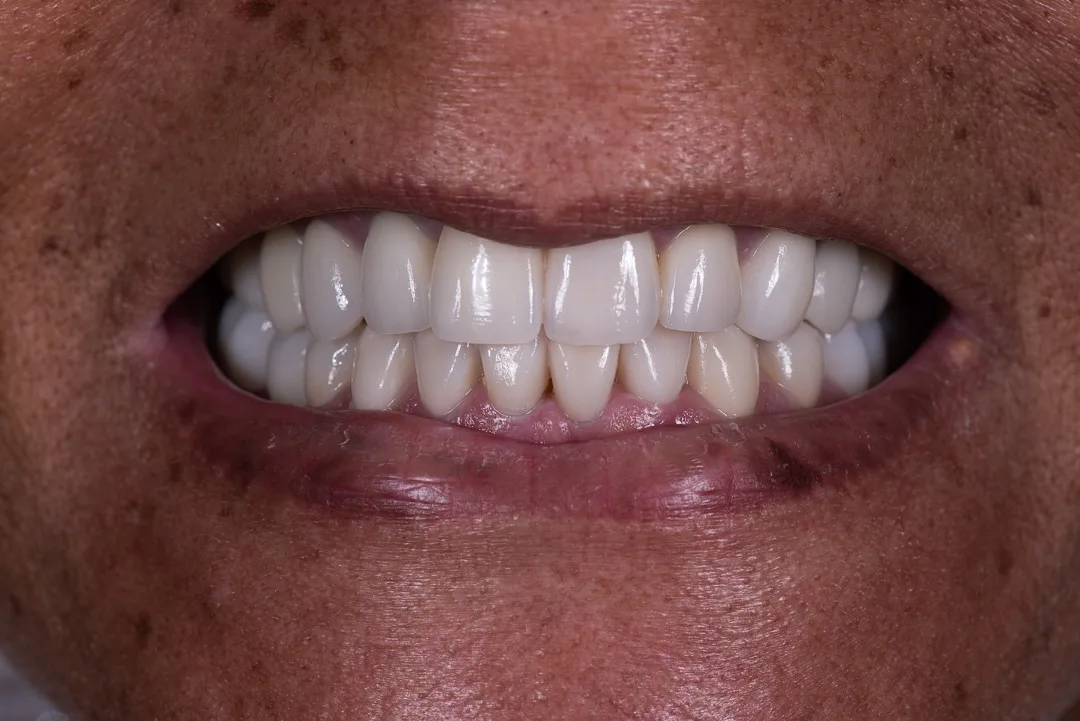

Patients missing a significant number of teeth have a few options available to them as they seek treatment to restore their mouth. Dental implants are one of the best ways to restore missing teeth and bring your mouth back to a healthy state. Implants have a very high success rate and are a stable and aesthetically pleasing way to replace one or more missing teeth. If you are missing a significant number of teeth or need to have hopeless teeth extracted, you might consider dental implants and even full mouth dental implants! Your dentist can discuss your options with you and help you decide if you are a candidate for dental implants and if that is the best treatment option for your individual case.
Traditional dental restorations include treatments such as crowns, bridges, and dentures. One of the biggest drawbacks to traditional bridges and dentures is the possibility of bone deterioration. Without tooth roots to stimulate bone regeneration, the jaw can begin to deteriorate causing dental restorations to become ill-fitting and even changes to facial structure and appearance. Dental implants have the benefit of not only being a more aesthetically pleasing restoration but also a much more stable restoration. Dental implants act as the root of a tooth and help stimulate bone regeneration, preventing deterioration.
What is the procedure for full mouth dental implants?
If your dentist believes that you are a candidate for full mouth dental implants, they will refer you to an oral surgeon or periodontist for evaluation. Once the specialist determines that you are indeed a good candidate for dental implants, they can schedule you for surgery!
At the time of your surgery, a topical numbing agent will be placed at the surgery sites before a local anesthetic is administered via injection. They will make a small incision in the gum tissue and then drill a small hole in which a titanium or zirconium implant will be placed. A healing cap will be placed over each implant, protecting it from damage and infection while it heals for up to six months. The healing time is long because the implants need time to integrate with the bone. Once that is complete and your implant doctor has released you from care, your dentist will restore them with an implant restoration.
Restoring Full Mouth Dental Implants
If you have opted to have an implant supported denture, your dentist will fabricate your denture and place it once your implant doctor releases you from care. Your dentist will remove the healing caps from each implant and secure your new implant denture onto the implants. Your new denture can either be screw-retained or clipped on. Clipped on implant dentures use an anchor secured to the implant which allows it to be removed by the patient. Screw-retained dentures are held in place using an abutment that sits directly on the implant, allowing the denture to be screwed down and can only be removed by a dentist.
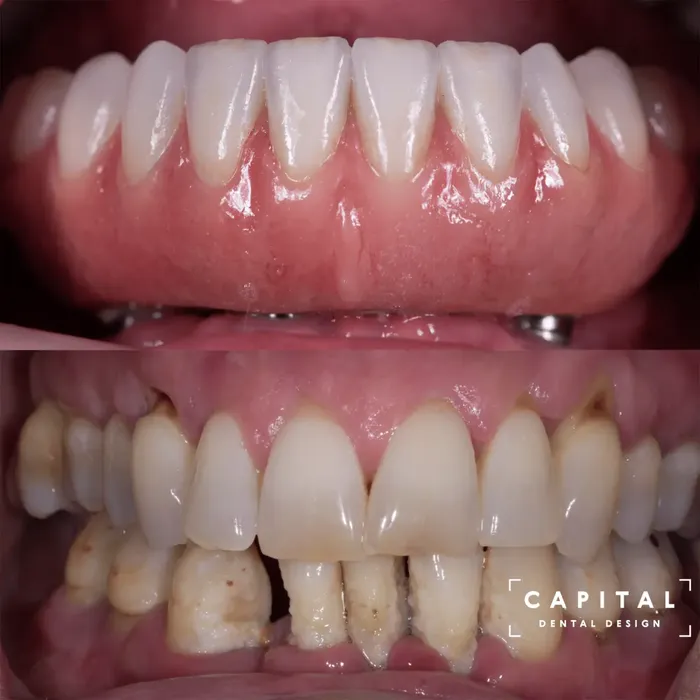
Full mouth dental implants are one of the most natural looking and secure options available to patients. Implant supported dentures are easy to care for and can last up to 20 years. Dental implants have the ability to last a lifetime with proper care and maintenance, though the denture itself may need to be replaced every 20 years or so. If you are interested in full mouth dental implants, discuss your options with your dentist. Not all patients are a candidate for implants since it is a more invasive surgical procedure but your dentist will evaluate your oral and overall health to determine what treatment path is best for you.
Related: Full Mouth Dental Implants Recovery Time
Have questions or ready to schedule? Contact Capital Dental Design today.
Schedule a Consultation