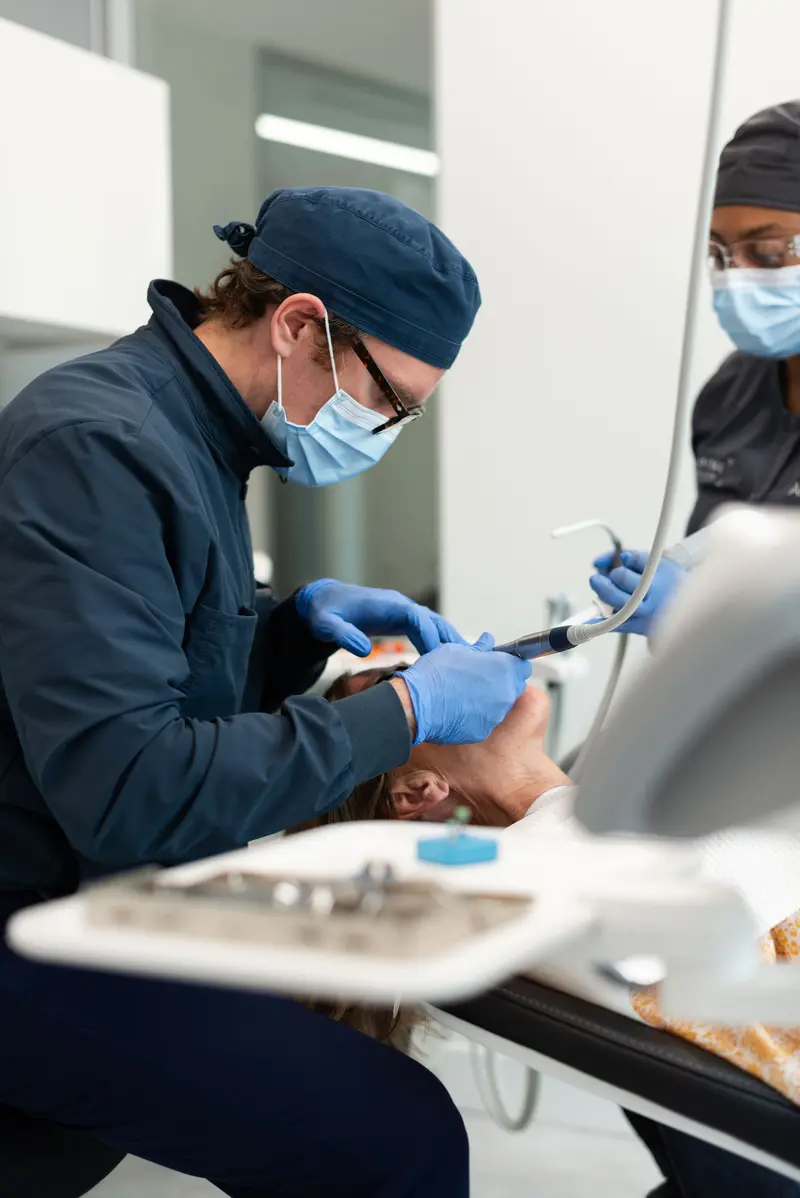




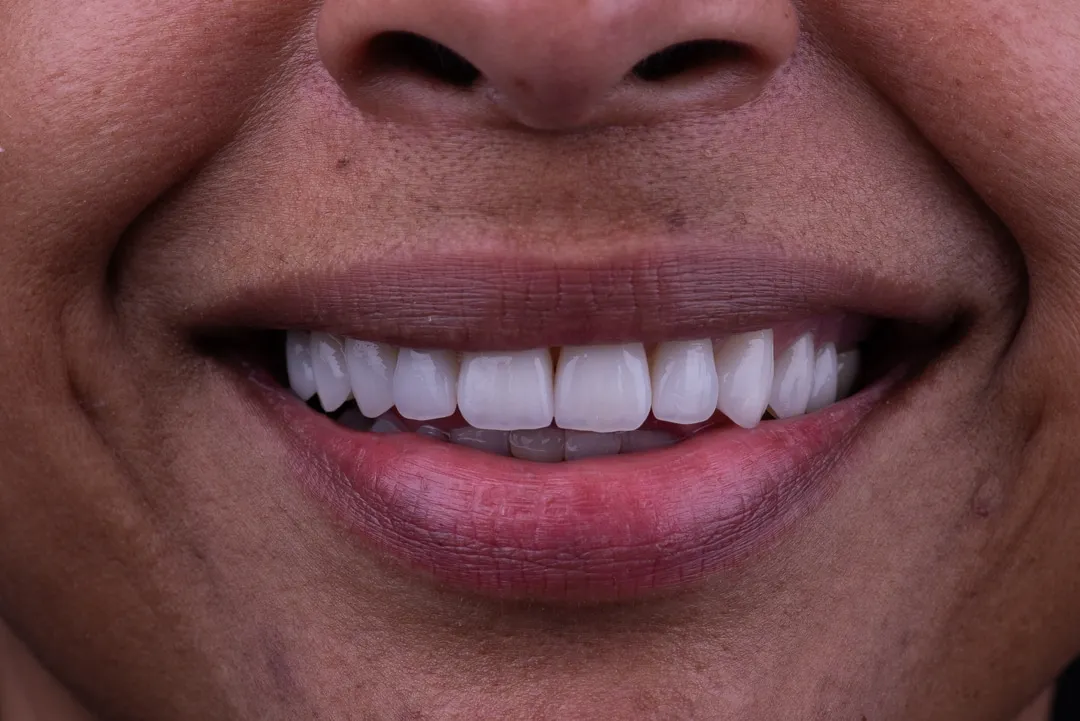
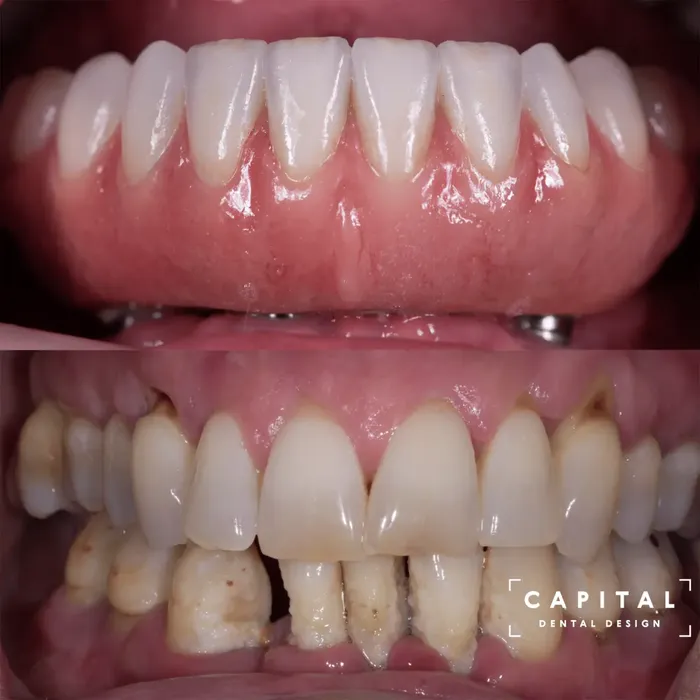

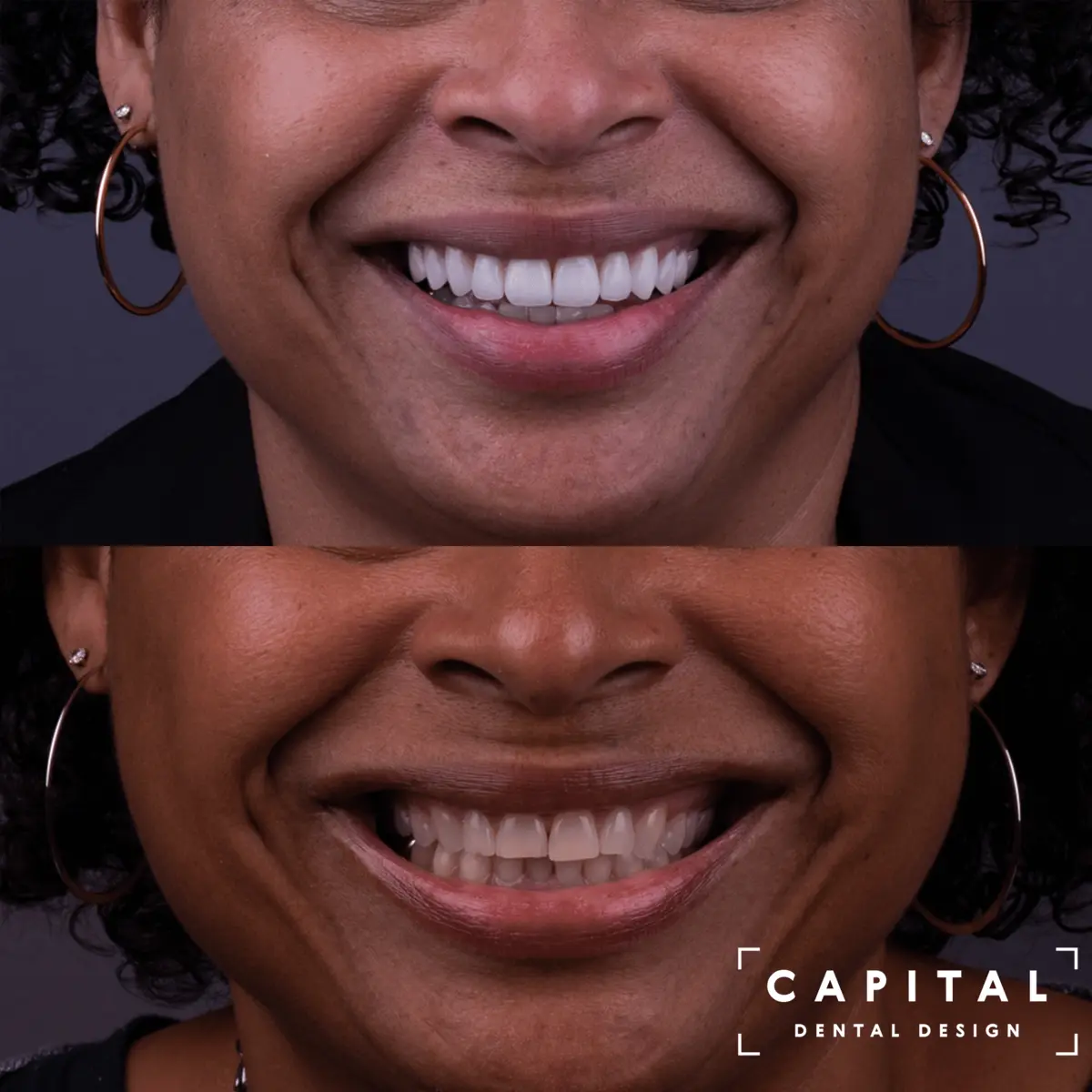
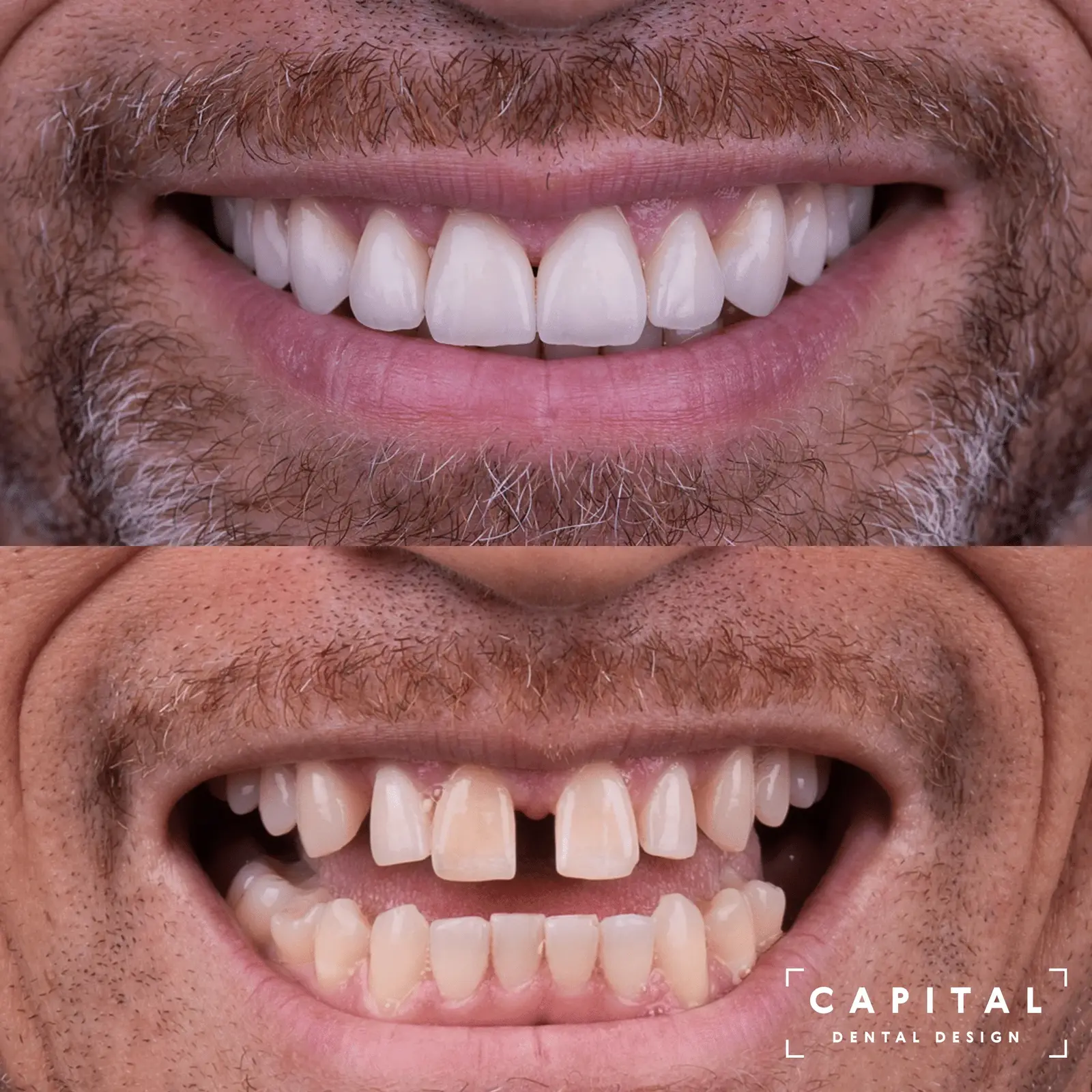
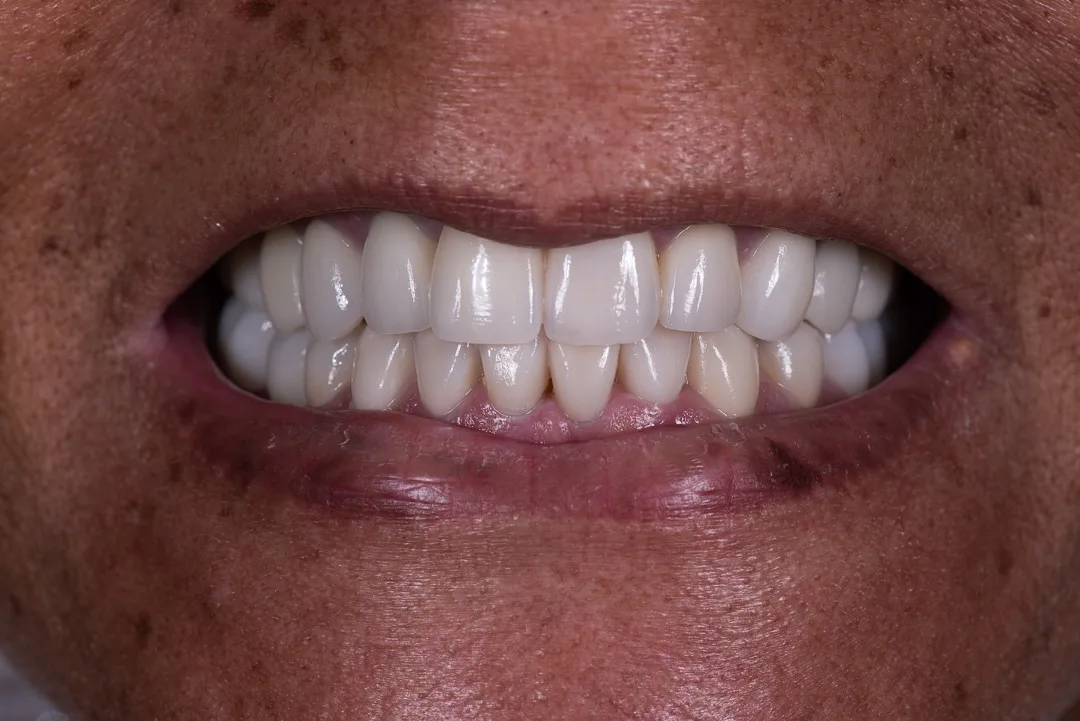

Patients missing a significant number of teeth who need a full or partial denture might consider an implant-supported denture! Dental implants can be used to secure the denture in place, giving the patient a much more stable way to restore missing teeth. Dental implants are used as an anchor for both full and partial dentures and are very beneficial! Not only do they offer optimal support, they provide stimulation for the jaw bone to regenerate and prevent deterioration.
Traditional dentures are designed to fit over the gum tissue and bone, held in place using retention, suction, and when necessary, denture adhesives. Over time, the bone structure will begin to deteriorate in the area that is missing teeth because tooth roots help stimulate bone growth. The lack of anything in place to aid in that process leads to a breakdown in bone mass.
When bone begins to break down, a traditional denture will become loose and uncomfortable to wear, causing friction and irritation, leading to sores on the gum tissue. Eventually, the patient’s facial structure may even begin to change
How do implant-supported dentures work?
A dental implant is a screw-like post that is surgically placed directly into the jaw bone. Implants are most commonly made out of titanium but for patients with metal allergies, they can be fabricated using zirconia. The implant is essentially an artificial tooth root that holds the implant restoration securely in place.
An oral surgeon or periodontist is the doctor that will place the actual implant before your dentist restores the implant with a single crown or an implant-supported denture. After the implant is placed, a temporary abutment (or healing cap) is put over the implant to protect it while you heal for up to six months. During this time, the implant will begin to fuse to the jaw bone. This osseointegration is what provides the incredible stability that implants patients love.
If a patient needs implants to support a full denture, they will likely need a few implants placed, up to six on each arch. An implant-supported denture cannot be removed by the patient.
How does a traditional denture work?
A traditional denture works like an implant-supported denture except instead of being screwed in place on multiple implants, it sits on top of the gum tissue and is held in place using suction and retention, adding adhesives when needed.
A partial denture also uses clasps that attach onto neighboring teeth to anchor it in place. A full upper denture fits snugly over the entire roof of the mouth whereas a lower denture is U-shaped to make room for the tongue. This type of denture can be removed by the patient for hygiene and sleeping.
Traditional Denture vs Permanent Denture
Patients that wear a traditional denture often have trouble with fit and retention because it is held in place with suction and adhesion which still allows the denture to slip around. An implant retained denture cannot slip out of place since it is screwed down.
With a success rate of 95% to 97%, dental implants can easily last a lifetime. Unless your denture was designed to be permanently fixed to your implants, your denture should be taken out daily for cleaning and at night before you go to sleep. To keep your gum tissue healthy, it is important to make sure you clean your gums twice a day with your toothbrush, even if your denture is permanently fixed in place. A lot of patients find that adding a WaterPik to their homecare routine is very helpful for cleaning under their implant-supported denture.
Another common problem with traditional dentures is a lack of stability. A traditional denture can be challenging for the patient to keep in place without using some form of denture adhesive which can still allow the denture to become loose or slip out of place. When a patient chooses to use dental implants to hold their denture in place, they have an easier time speaking and eating. Even hygiene is easier since they are no longer using an adhesive. An implant-supported denture can be removable or fixed, both are more stable and secure than a traditional denture.
Why is an implant-supported denture the better option?
Health and Self-Confidence
[... middle omitted — see footer ...]
Implant-supported dentures also provide improved aesthetics for the patient. An implant-supported denture will enhance face shape while enabling proper nutrition since the patient is able to bite and chew normally. Speaking is also much easier and more natural when the denture is stable.
Cost and Longevity
An implant supported denture may be more expensive at the onset but having the implants placed is typically a one time expense as dental implants can easily last a lifetime. Traditional dentures and bridges need to be replaced as the bone deteriorates and facial structure changes. Traditional dentures may last up to 10 years before needing to be replaced but an implant denture can easily last up to 20 years. Less frequent replacement for an implant retained denture often makes it more cost-effective in the long run for some patients.
Patients who have sufficient bone structure and are otherwise healthy enough to endure implant placement surgery and up to six months of healing may be an ideal candidate for dental implants. If you are interested in dental implants to support your denture, your dentist will perform an exam and review your options with you. If they believe that you are a candidate for an implant-supported denture, they will refer you to an oral surgeon or periodontist for further evaluation.
Showing 4,269 chars (head) + 1,335 chars (tail) of 6,035 total clean characters.
Full text saved to: /root/.hermes/cache/web/capitaldentaldesign.com-76b70a0074.md
To read the omitted middle: read_file path="/root/.hermes/cache/web/capitaldentaldesign.com-76b70a0074.md" offset=35 limit=200 (the file is the complete page; raise/lower offset to page through it).
Related: Lifespan of a Dental Implant
Have questions or ready to schedule? Contact Capital Dental Design today.
Schedule a Consultation