




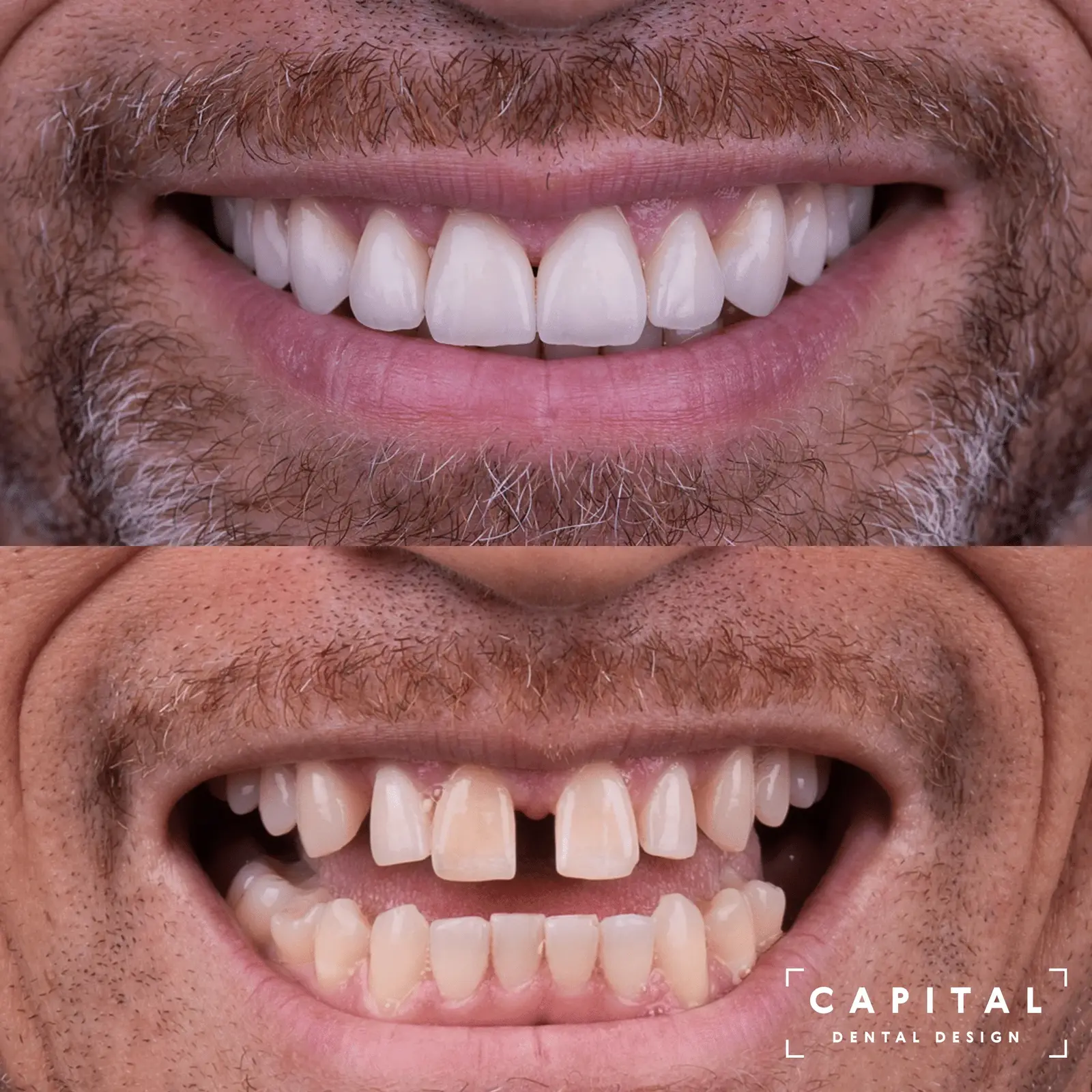
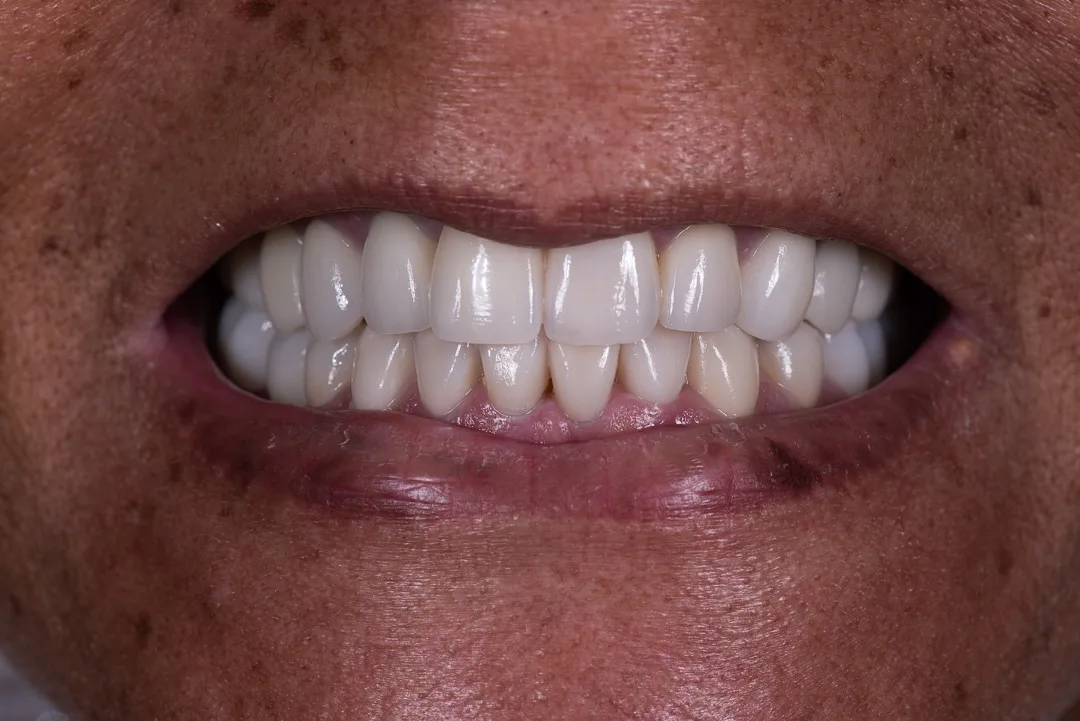

Invented by Atlanta dentist, Dr. Stewart Halbauer, but popularized at the University of Maryland, a Maryland bridge is a permanent dental restoration that can be used to replace a lost tooth. While similar to traditional dental bridges that attach prosthetic replacement teeth to teeth adjacent the gap, Maryland bridges bond to the teeth differently.
How Are Maryland Bridges Held in Place?
When placing a traditional dental bridge, the dentist will have to remove portions of healthy tooth enamel to make room for the device. This has a permanent affect on the teeth upon which the bridge attaches.
Unlike traditional dental bridges, Maryland bridges do not require enamel on adjacent teeth to be shaved down by the dentist. Instead, the surfaces of the teeth adjacent the gap are lightly etched to facilitate bonding and Maryland bridges attach to the back of the teeth using thin metal “wings”. Using a composite resin, the dentist bonds the metal framework between the prosthetic tooth and supporting teeth. Finally, the resin is cured to secure the bridge in place
Maryland bridges are not as commonly used as traditional dental bridges and are not suitable tooth replacement options for all patients. They are reserved for patients with healthy adjacent teeth and good overall oral hygiene that need replacement of one or two front teeth.
Advantages and Disadvantages of Maryland Bridges
As is the case with all dental procedures, Maryland bridges have pros and cons. Some of the advantages offered by Maryland bridges include:
* Non-invasive procedure (doesn’t require surgery)
* Procedure is typically low-risk, fast, and requires minimal preparation
* Results are immediate
* Less costly compared to other dental treatments
* Does not necessitate the removal of healthy tooth enamel from adjacent teeth; avoids permanently affecting adjacent teeth
* Gives the patient a seamless smile
* Are hygienic and allow the patient to easily brush
* Generally long-lasting
No treatment is perfect so potential drawbacks of Maryland dental bridges include:
* Might not be suitable for certain teeth (like molars in the rear of the mouth)
* Rebonding may be needed every five to eight years
* Adjacent teeth could darken from the bonding used to attach the wings (whitening treatments could help combat discoloration)
* If not properly cleaned, tooth decay can develop
* The prosthetic tooth may not match the color of the surrounding natural teeth perfectly
* Only suitable for patients with good oral hygiene
* Not recommended for patients needing to replace more than two lost teeth
Maryland Bridge Recovery Process
Once a Maryland bridge has been placed, patients should be able to chew, eat, and talk normally. Because the procedure is non-invasive and straightforward, there is no real recovery process involved and no pain should be experienced. Some mild sensitivity could be noticed initially so avoiding foods or liquids that could trigger sensitivity should be avoided.
Because oral hygiene is vital to the long-term success of the bridge, patients should ensure they maintain a thorough flossing and brushing regimen. Using mouthwash can also help keep the area clean and free of harmful bacteria. With proper care, Maryland dental bridges typically last 10 years.
Related: What is the Cost of a Dental Bridge
Have questions or ready to schedule? Contact Capital Dental Design today.
Schedule a Consultation